
Quick Summary: Loyalty program cards help businesses boost repeat visits, gather valuable customer data, and increase brand visibility. Digital cards are easier for customers and faster to implement than physical ones. The key is to keep rewards simple, easy to redeem, and tailored to your buying cycle.
A coffee shop, salon, or boutique can swap paper punch cards for loyalty program cards stored on a customer’s phone and tracked on every visit. Many owners know they need loyalty program cards, but struggle with formats, costs, and setup. This guide explains how loyalty program cards work, which type fits your business, and what to avoid based on real small business marketing practice.
A loyalty program card links each customer to a reward account. The business tracks visits, spend, or actions, then gives points, stamps, discounts, or perks in return. Wikipedia defines loyalty programs as a way to encourage repeat buying through an ongoing reward system here.
Physical cards are plastic, paper, or key tags scanned at checkout. Digital cards live in apps or mobile wallets. Digital wallets can store loyalty cards and pass data to a merchant terminal, according to Wikipedia’s digital wallet overview.
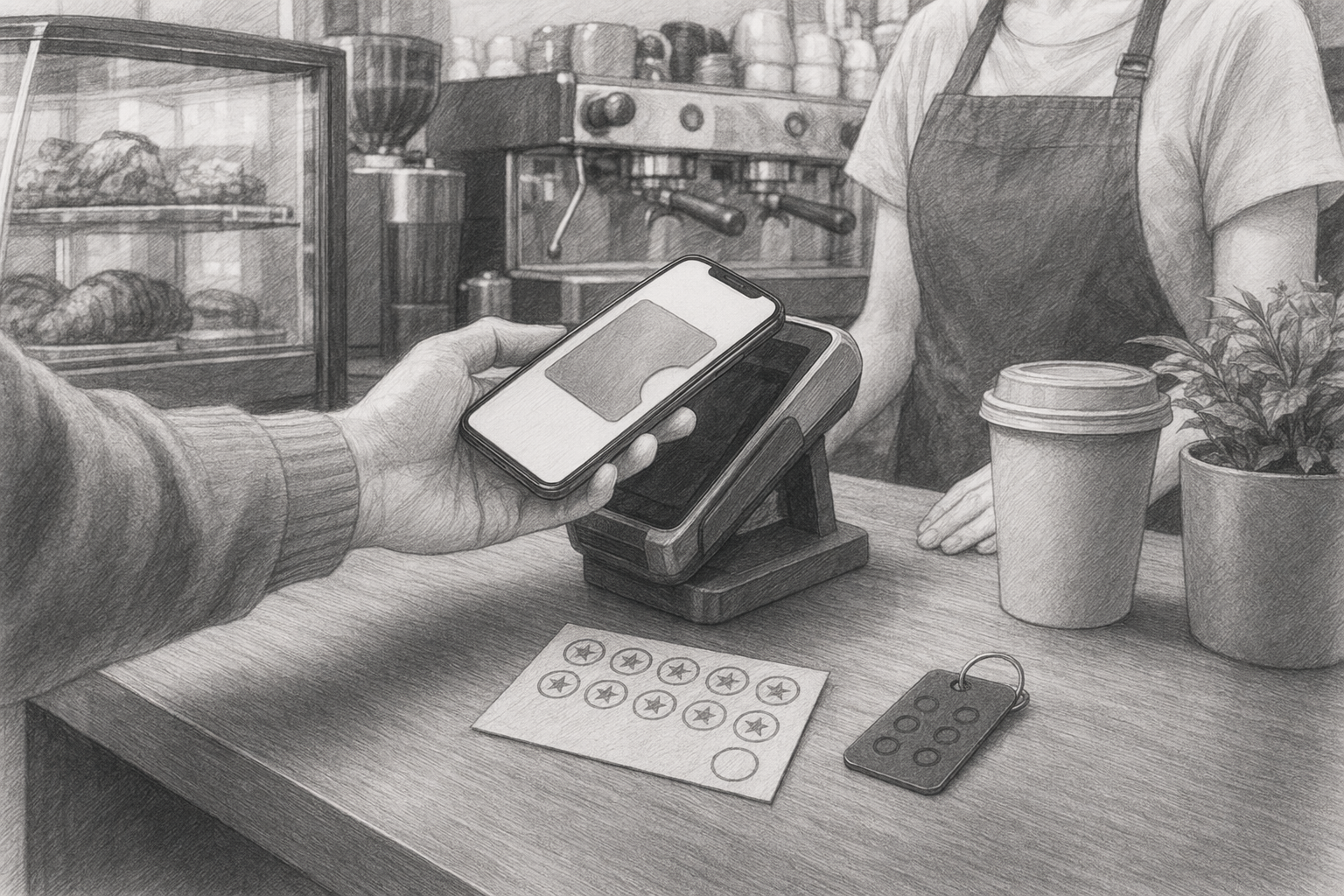
Digital cards usually cut friction because customers do not need to carry one more card.
| Format | How it works | Best fit |
|---|---|---|
| Stamp card | Earn one stamp per visit | Coffee, quick service |
| Points card | Earn points by spend | Retail, beauty, hospitality |
| Tier card | Unlock levels and perks | Multi-location brands |
Loyalty cards give customers a clear reason to come back. Rewards turn one-time buyers into regulars by adding a small goal to each visit. LoyaltyLion research says 90% of shoppers feel loyalty programs help drive repeat purchases.
Every scan, stamp, or reward claim shows what people buy, when they visit, and how often they return. That helps you spot high-value customers, slow periods, and offers that work. According to Antavo’s 2026 report, many businesses also see loyalty data as a key source of added value.

Cards keep your brand in front of customers between visits, especially with digital wallet passes and reward reminders. They also create a simple habit loop:
The best loyalty card is easy to join, easy to use, and easy to redeem.
Choose your loyalty card system by matching it to how often people buy, what your staff can manage, and how much control you need across locations. Square notes that loyalty works best when rewards are easy to earn and easy to redeem, not hard to explain or track Square’s guide.
Features to prioritize
If staff must fix rewards by hand, the system will break under pressure.
What multi-location businesses should look for
The 2026 Paytronix report highlights unified data and cross-channel consistency as core loyalty needs for growing brands Paytronix 2026 Loyalty Report.
Which businesses fit which card type
Keep enrollment friction low
Ask for the fewest details possible at signup. Use one clear prompt at checkout, by SMS, or on a receipt. Umbrex notes weak identity and data flow can break trust fast.
Train staff and keep the reward simple
Give staff a short script and one goal: explain the benefit in one sentence. Keep the first reward easy to understand and close enough to feel real. BTAQA says simplicity is the top rule for participation.
If a customer cannot grasp the offer in 10 seconds, simplify it.
They cut print costs, speed sign-up, track visits, and make repeat buying easier.
It removes download friction, so more customers join and use rewards often.
Look for easy setup, custom rewards, customer data, automation, and multi-location support.
Use visit rewards, birthday offers, tiers, and time-based promos that fit buying habits.
Cards keep your brand on phones, increase return visits, and lift customer lifetime value.
Keep rewards simple, train staff, support local languages, and track redemption by location.
They work across markets, cost less than apps, and help local shops compete with chains.
Coffee shops, salons, restaurants, and fitness brands often win with simple stamp or points cards.
Loyalty program cards work best when they are simple, easy to use, and worth coming back for. Focus on clear rewards, smooth redemption, and solid tracking. Recent Deloitte research shows strong enrollment, but selective engagement, so relevance matters most.
OneCup LLC
651 N BROAD ST - SUITE 201
MIDDLETOWN DE 19709
United States
Whatsapp : +18023003737

.svg)

.svg)
.png)